
Medicare Basics: A Beginner’s Guide to Understanding Medicare

If you’re approaching age 65, you’ve probably started hearing a lot about Medicare. For many people, it’s the first time navigating a federal health insurance program, and the terminology alone can feel overwhelming, especially without guidance from a local Medicare agent in Blair County, PA.
The good news is that once you understand the basics, Medicare becomes much easier to navigate. As a Blair County-based Medicare expert, I’ve helped individuals throughout the area make sense of their options, simplify the process, and avoid common pitfalls (you can read more about the benefits of working with a local Medicare broker here).
This guide provides a high-level overview of how Medicare works, the different coverage options available, and the key decisions you’ll need to make when enrolling.
What is Medicare?
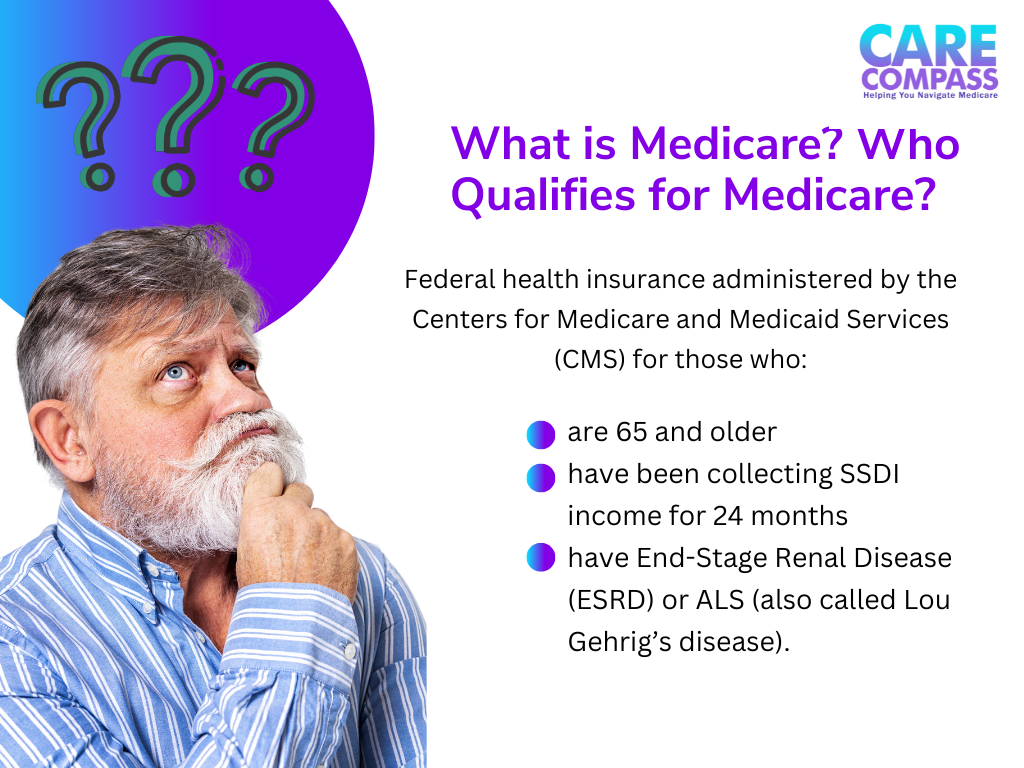
Medicare is a federal health insurance program primarily designed for people age 65 and older. It also covers some younger individuals with certain disabilities or serious medical conditions. The program is administered by the Centers for Medicare & Medicaid Services, while enrollment is typically handled through the Social Security Administration.
Medicare helps cover many healthcare services, including hospital stays, doctor visits, preventive services, and prescription drugs. However, it does not cover all medical costs, which is why many beneficiaries choose additional coverage options.
Who Is Eligible for Medicare?
Most people become eligible for Medicare when they turn 65. However, you may also qualify earlier if you meet certain conditions. You may be eligible if you:
Are 65 or older
Have received disability benefits for 24+ months
Have End-Stage Renal Disease (ESRD)
Have Amyotrophic Lateral Sclerosis (ALS)
Many individuals are automatically enrolled in Medicare A and B if they are already receiving Social Security benefits prior to turning 65.
The Four Parts of Medicare
Medicare coverage is divided into four different parts, each covering different types of healthcare services.

Medicare Part A – Hospital Insurance
Part A primarily covers inpatient care, including:
Hospital stays
Skilled nursing facility (SNF) care
Hospice care
Some home health services
Many people qualify for premium-free Part A if they paid Medicare taxes while working.
Medicare Part B – Medical Insurance
Part B covers outpatient medical services such as:
Doctor visits
Preventive care and screenings
Lab tests
Durable medical equipment
Outpatient procedures
Most beneficiaries pay a monthly premium for Part B, along with deductibles and coinsurance.
Medicare Part C – Medicare Advantage
Medicare Advantage plans are offered by private insurance companies approved by Medicare.
These plans provide an alternative way to receive your Medicare benefits by combining Part A and Part B coverage into one plan. Many plans also include prescription drug coverage and additional benefits like dental, vision, or fitness programs. Coverage details and costs can vary depending on the plan and location.
What is Medicare Advantage and how does it work? For a comprehensive overview, visit Exploring Medicare Advantage (Part C): A Beginner’s Guide.
Medicare Part D – Prescription Drug Coverage
Part D plans help cover the cost of prescription medications. These plans are offered by private insurance companies and work alongside Medicare. Most Part D plans have:
A monthly premium
An annual deductible
Copayments or coinsurance for medications
Choosing the right Part D plan depends on the medications you take and the pharmacies you prefer.
Your Two Main Medicare Coverage Paths
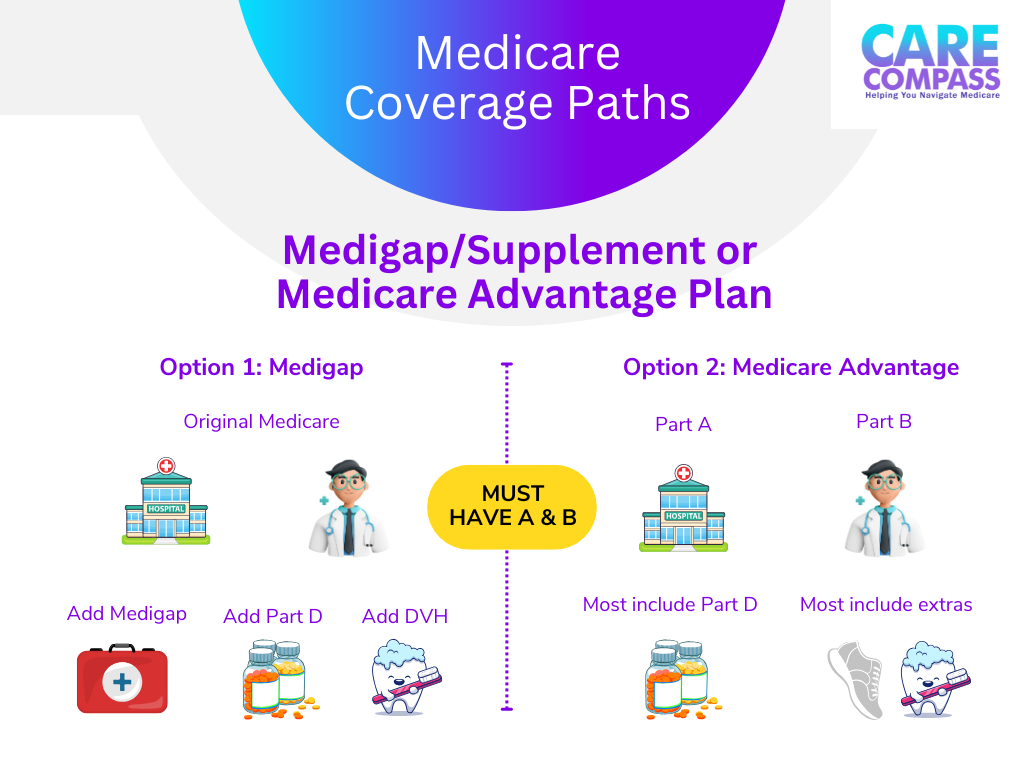
Once you enroll in Medicare, one of the most important decisions you’ll make is how you want to receive your coverage. Most people choose one of two main options.
Option 1: Original Medicare + Additional Coverage
With this approach, you keep Original Medicare (Parts A and B) and add additional policies to help cover costs.
Many people choose to add:
Medicare Supplement Insurance (AKA Medigap)
A Medicare Part D prescription drug plan
This option typically provides more flexibility in choosing doctors and hospitals, but it may involve paying multiple premiums.
Option 2: Medicare Advantage
Medicare Advantage plans replace Original Medicare coverage with a private plan. These plans usually combine:
Hospital coverage
Medical coverage
Often prescription drug coverage
Many plans also offer extra benefits such as dental, vision, hearing, and wellness programs. However, Medicare Advantage plans typically use provider networks, which means you may need to see doctors within the plan’s network.
When Do You Enroll in Medicare?
Timing is important when enrolling in Medicare because missing your enrollment window can lead to late penalties or gaps in coverage. Some of the most important enrollment periods include:
Initial Enrollment Period (IEP): This is the seven-month window surrounding your 65th birthday.
Annual Enrollment Period (AEP): Runs from October 15 through December 7 each year and allows beneficiaries to change plans.
Special Enrollment Periods (SEPs): Certain life events, such as losing employer coverage, may allow you to enroll or make changes outside the standard enrollment periods.
What Does Medicare Cost?
While Medicare helps cover many healthcare expenses, it is not completely free. Common Medicare costs may include:
Monthly premiums
Deductibles
Copayments
Coinsurance
Many beneficiaries receive premium-free Part A, but most people pay a monthly premium for Part B and any additional plans they choose. Costs can also vary depending on income and the type of coverage selected.
Prescription Drug Coverage
Prescription drug coverage is an important part of Medicare planning. Many beneficiaries choose a standalone Part D plan or a Medicare Advantage plan that includes drug coverage.
Without drug coverage, some individuals may face late enrollment penalties if they decide to enroll in Part D later.
Selecting the right drug plan often depends on your current prescriptions, preferred pharmacies, and expected medication costs.
Summary
Medicare provides valuable health coverage, but it also involves several important decisions. Understanding the basics—such as how the different parts work, when to enroll, and the coverage options available, can help you make informed choices about your healthcare.
As you explore Medicare further, diving deeper into each topic can help you choose the coverage that best fits your healthcare needs and financial situation. Need some help navigating your options? Schedule your NO COST consultation with Care Compass today!

Care Compass is an independent insurance agency that helps seniors navigate the complexities of Medicare and other Senior Products. Our services are offered at NO COST! Care Compass is proudly owned and operated in Blair County, Pennsylvania. We provide Medicare insurance assistance to the residents of Altoona, Hollidaysburg, Duncansville and the surrounding region. If you need assistance with Medicare, contact Care Compass today!
