
A Beginner's Guide to Medicare: What It Is, How It Works, and Where to Start

If you're approaching age 65, you've probably started hearing a lot about Medicare. For many people, it's the first time navigating a federal health insurance program, and the terminology alone can feel overwhelming. Whether you live right here in Blair County, PA, or anywhere else in Central Pennsylvania, figuring out your healthcare options shouldn't be a source of stress.
The good news is that once you understand the basics, Medicare becomes much easier to navigate. As a local Medicare expert, I've helped individuals throughout Altoona, Hollidaysburg, and the surrounding areas make sense of their options, simplify the process, and avoid common pitfalls. (You can read more about why local Medicare help matters now more than ever).
This guide provides a comprehensive overview of how Medicare works, the different coverage options available, and the key decisions you'll need to make when enrolling.
Understanding Medicare Eligibility & Basics
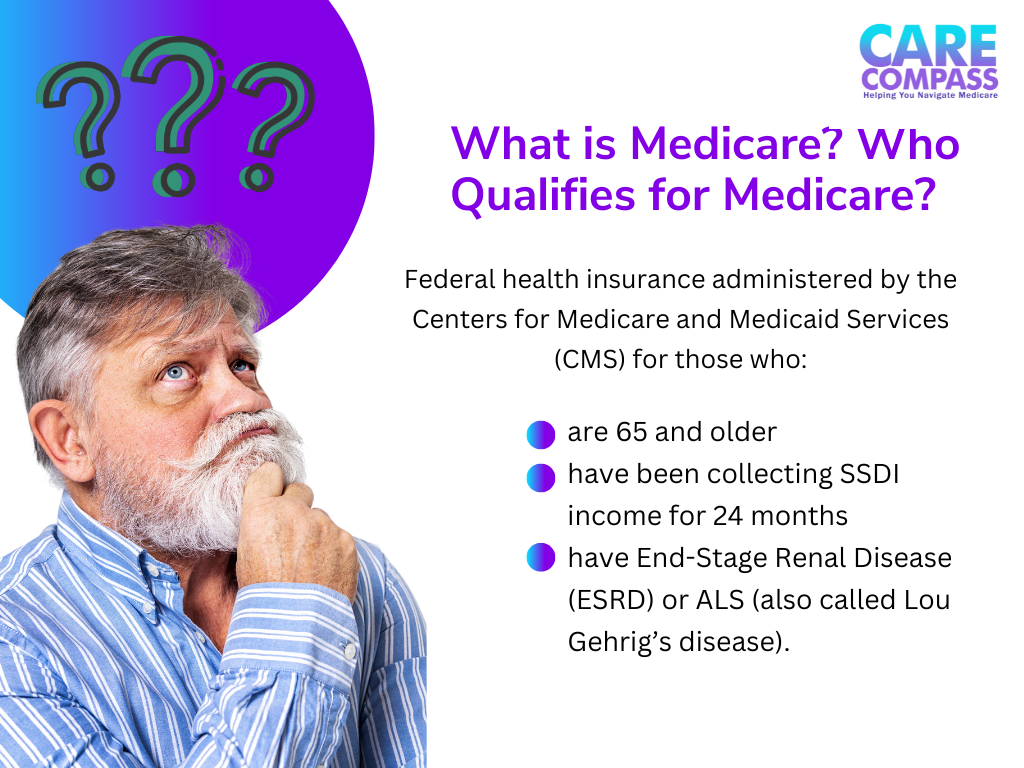
Medicare is a federal health insurance program primarily designed for people age 65 and older. It also covers some younger individuals with certain disabilities or serious medical conditions, such as End-Stage Renal Disease (ESRD) or Amyotrophic Lateral Sclerosis (ALS).
The program is administered by the Centers for Medicare & Medicaid Services, while enrollment is typically handled through the Social Security Administration. Many individuals are automatically enrolled in some parts of Medicare if they are already receiving Social Security benefits before turning 65.
While Medicare helps cover many healthcare services - including hospital stays, doctor visits, preventive services, and prescription drugs - it does not cover all medical costs. In fact, there are surprising services that are NOT covered under Original Medicare, such as routine dental, vision, and hearing care. This is why almost all beneficiaries choose to add additional coverage.
The Four Parts of Medicare
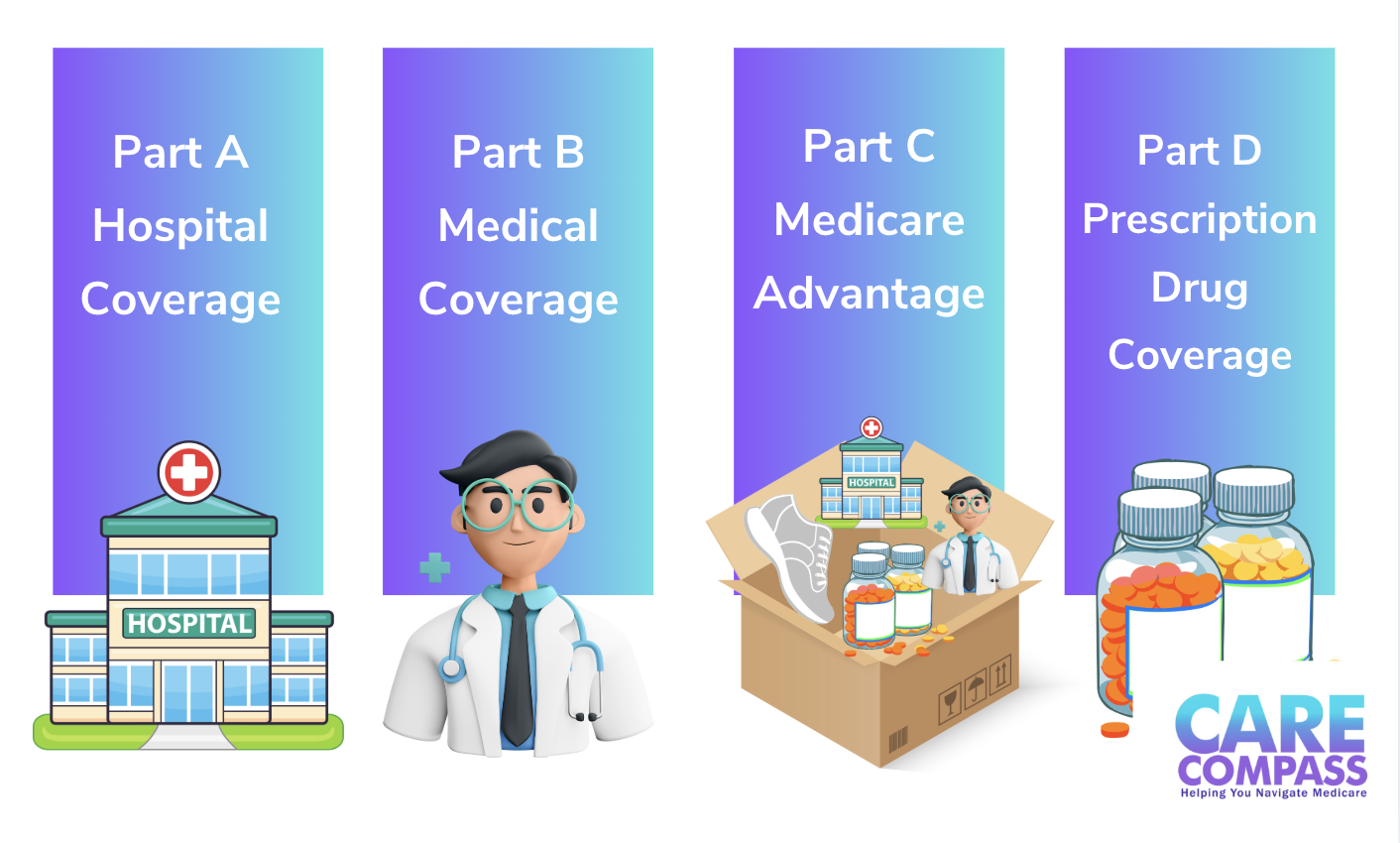
Medicare coverage is divided into four different parts, each covering different types of healthcare services.
Medicare Part A – Hospital Insurance
Part A primarily covers inpatient care. If you are admitted to a hospital, require care in a skilled nursing facility, or need hospice care, Part A is what you will use. It also covers limited home health services. Most people qualify for premium-free Part A because they (or their spouse) paid Medicare taxes while working for at least 10 years.
Medicare Part B – Medical Insurance
Part B covers outpatient medical services. This includes your routine doctor visits, preventive care and screenings, lab tests, durable medical equipment, and outpatient procedures. Unlike Part A, most beneficiaries pay a standard monthly premium for Part B, along with an annual deductible and a 20% coinsurance for most services.
Medicare Part C – Medicare Advantage
Medicare Advantage plans are offered by private insurance companies approved by Medicare. These plans provide an alternative way to receive your Medicare benefits by bundling Part A and Part B coverage into one single plan. Many plans also include prescription drug coverage and additional benefits like dental, vision, or fitness programs.
📌 Learn more: Exploring Medicare Advantage (Part C): A Beginner’s Guide.
Medicare Part D – Prescription Drug Coverage
Part D plans help cover the cost of prescription medications you pick up at the pharmacy. These plans are offered by private insurance companies and work alongside Original Medicare. Most Part D plans have a monthly premium, an annual deductible, and copayments or coinsurance for your medications. Choosing the right Part D plan often depends entirely on the specific medications you take and the local pharmacies you prefer to use.
📌 Video: Step-by Step Guide: EvaluatingYour Prescription Drug Plan Using the official Medicare website.
A note on the “Donut Hole” 🍩
If you've researched Medicare in the past, you may have heard horror stories about the Part D "Donut Hole" (the coverage gap). The good news? The Donut Hole was officially eliminated in 2025, bringing much-needed relief and capping out-of-pocket drug costs for beneficiaries. You can read more about Medicare Part D and how it changed in 2025 here.
Your Two Main Medicare Coverage Paths
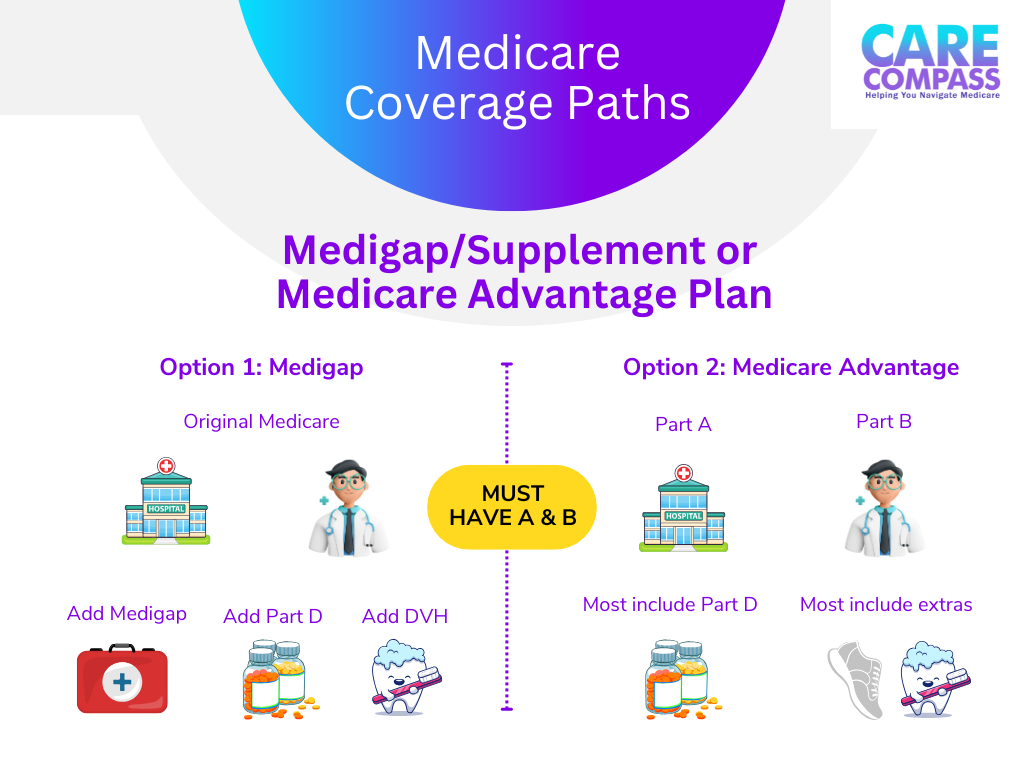
Once you enroll in Original Medicare (Parts A and B), you will quickly realize that it leaves you responsible for deductibles and a 20% coinsurance with no annual cap. To protect themselves from these Medicare gaps, most people choose one of two main coverage paths.
Option 1: Original Medicare + Medigap and a Prescription Drug Plan
With this approach, you keep Original Medicare as your primary insurance and purchase a Medicare Supplement Insurance policy (often called Medigap) to pay the deductibles and the 20% coinsurance that Medicare leaves behind. Because Original Medicare doesn't cover prescriptions, you will also need to purchase a standalone Part D plan.
This option typically provides the most flexibility. You can see any doctor or visit any hospital in the United States that accepts Medicare, without worrying about network restrictions or referrals. However, it does involve paying multiple monthly premiums (your Part B premium, your Medigap premium, and your Part D premium).
📌 Learn more: Understanding Medicare Supplements: Bridging the Gaps in Coverage with Plans G, N, and HDG.
Option 2: Medicare Advantage
Medicare Advantage plans replace Original Medicare with a private health plan. These plans bundle your hospital, medical, and (usually) prescription drug coverage into one package. Many plans also offer extra benefits such as dental, vision, and hearing coverage.
While these plans often have low or even $0 monthly premiums (though you must still pay your Part B premium), they operate differently than Medigap. You will typically pay copays as you use services, and you will need to use the plan's network of local doctors and hospitals to get the best rates.
📌 Learn more: 10 Medicare Advantage Myths Debunked
For a deeper dive into the differences between these two coverage paths, visit Which is Better: Medicare Advantage or Medicare Supplement?
When Do You Enroll in Medicare?

Timing is critical when enrolling in Medicare. Missing your enrollment window can lead to lifetime late penalties or gaps in your health coverage.
Initial Enrollment Period (IEP): This is your first chance to sign up. It is a seven-month window that includes the three months before your 65th birthday month, the month of your birthday, and the three months after. Read our full breakdown here: What is the Medicare "Initial Enrollment Period"?
✅ IMPORTANT: Turning 65 This Year? A Medicare Checklist for New Beneficiaries
Annual Enrollment Period (AEP): Running from October 15 through December 7 each year, this period allows current beneficiaries to review and change their Medicare Advantage or Part D prescription drug plans for the upcoming year.
Special Enrollment Periods (SEPs): Certain life events, such as retiring and losing your employer health coverage, moving out of your plan's service area, or qualifying for extra help, may allow you to enroll or make changes outside the standard windows. Learn more at Medicare Special Enrollment Periods Explained.
📌 Learn More: What Happens if You Miss Your Medicare Enrollment Period?

Medicare FAQ: Do I need to enroll in Medicare if I plan to continue working past 65?
If you plan to keep working past age 65, you have specific rules to follow to avoid penalties.
📌 Learn more: Medicare & Group Health Insurance: A Complete Guide for Employees Approaching 65.
📌 Also read: Working Past 65? Five Costly Mistakes Medicare Beneficiaries Make.
📌 Must read for those with HSAs! HSAs and Medicare: What You Must Know Before You Enroll
What Does Medicare Cost?
While Medicare helps cover many healthcare expenses, it is not completely free. Common Medicare costs include your monthly premiums, annual deductibles, copayments for visits, and coinsurance for services. Most beneficiaries receive premium-free Part A, but almost everyone pays a standard monthly premium for Part B.
📌 For a full cost breakdown specific to our area, read: How Much Does Medicare Really Cost Each Month in Blair County, PA?
High Earners and IRMAA
If your income is above a certain threshold, you may be subject to the Income-Related Monthly Adjustment Amount (IRMAA). This means you will pay a higher premium for both Part B and Part D based on your modified adjusted gross income from two years prior. For more information, visit IRMAA Explained: Why Some Medicare Beneficiaries Pay More (and What You Can Do About It.
Financial Assistance Programs
If you have limited income and resources, you shouldn't have to choose between paying for groceries and paying for healthcare. There are state and federal programs designed to help lower your Medicare costs.
Medicare Savings Programs (MSPs): These state-run programs help pay your Medicare Part B premiums. In some cases, they may also cover Part A and Part B deductibles, coinsurance, and copayments.
📌 Learn More: Medicare Savings Programs in Pennsylvania: Help With Medicare Costs
Extra Help (Low-Income Subsidy / LIS): This federal program helps people with limited income and resources pay for Medicare Part D prescription drug costs, including premiums, deductibles, and coinsurance.
PACE/PACENET: Specifically for Pennsylvania residents, these programs offer comprehensive prescription drug coverage to older adults to help cover the costs of medications.
If you think you may qualify, it is absolutely worth exploring these assistance options.
📌 Extra Help and the PACE/PACENET program will see some changes in 2027. To learn more, visit: What Medicare Part D Will Cost You in 2027.
Summary
Medicare provides valuable health coverage, but it also involves several important decisions. Understanding the basics - such as how the different parts work, when to enroll, and the coverage options available - can help you make informed choices about your healthcare.
As you explore Medicare further, diving deeper into each topic can help you choose the coverage that best fits your healthcare needs and financial situation. Need some help navigating your options in Blair County or Central PA? Schedule your NO COST consultation with Care Compass today!

Care Compass is an independent insurance agency that helps seniors navigate the complexities of Medicare and other Senior Products. Our services are offered at NO COST! Care Compass is proudly owned and operated in Blair County, Pennsylvania. We provide Medicare insurance assistance to the residents of Altoona, Hollidaysburg, Duncansville and the surrounding region. If you need assistance with Medicare, contact Care Compass today!
