Medicare and GLP-1 Coverage: What the New Bridge Program Means for Beneficiaries

One common question we hear at Care Compass is whether Medicare covers weight-loss medications, and for years, the answer has been no. Medicare Part D has been prohibited by law from covering drugs prescribed solely for weight management, but that changes today, July 1, 2026.
Following recent policy shifts that allowed GLP-1 coverage for specific conditions like cardiovascular risk reduction and sleep apnea, CMS took a bigger step forward. The Medicare GLP-1 Bridge Program is now live, and it creates a real, albeit temporary, pathway for eligible beneficiaries to access these medications for weight management.
If you live in Blair County or Central PA and have been waiting for Medicare to cover medications like Wegovy or Zepbound, here is everything you need to know!
What is the Medicare GLP-1 Bridge Program?
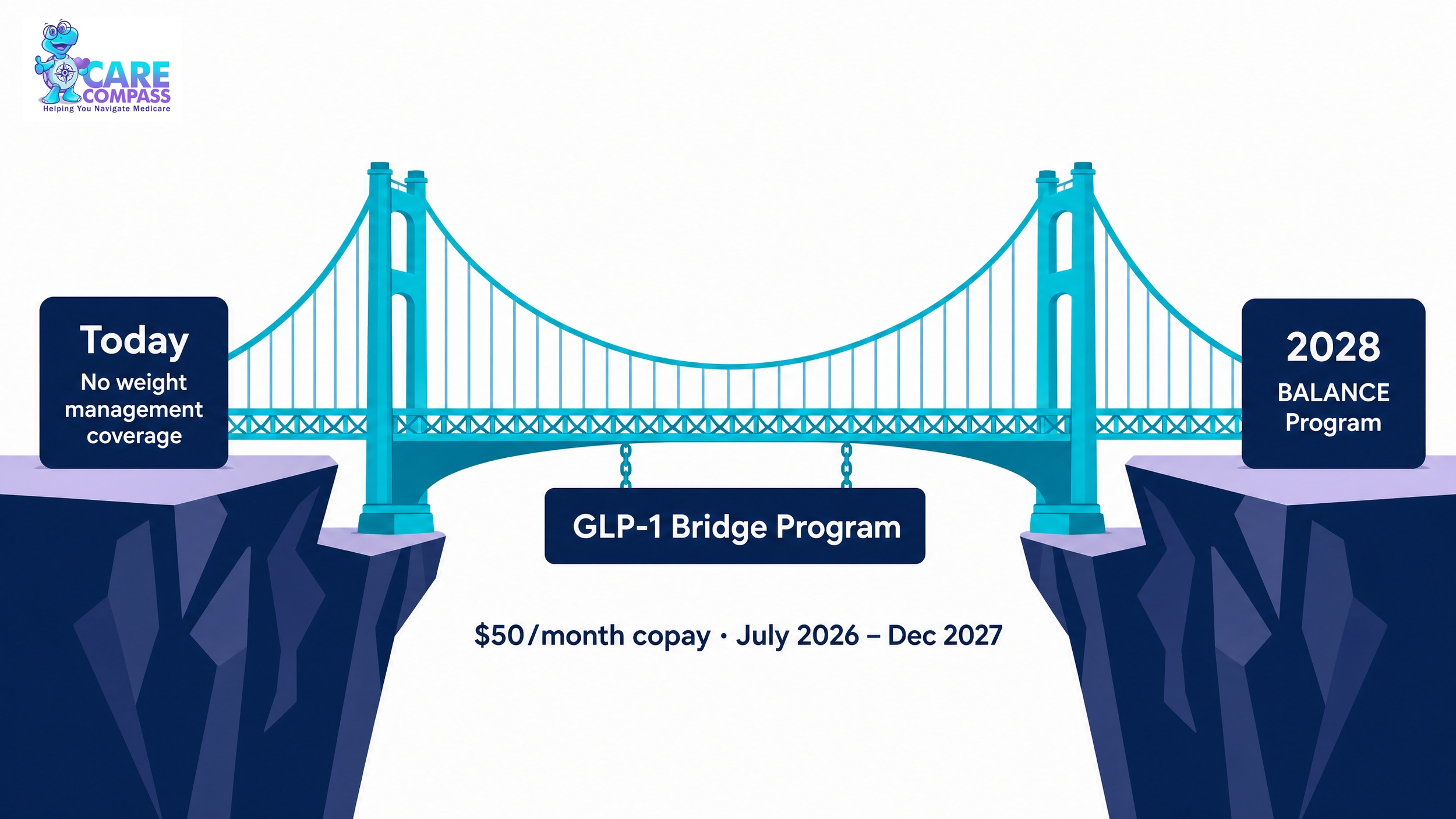
The GLP-1 Bridge Program is a temporary program created by CMS to give Medicare beneficiaries access to certain weight-management medications while a permanent coverage solution is developed.
The program runs from July 1, 2026, through December 31, 2027. It was originally planned as a six-month bridge, but CMS extended it after the permanent program (called BALANCE - more on that below) did not attract enough plan participation to launch on schedule. The extra time gives Medicare drug plans a chance to opt in and to study the data before they commit to covering them long-term.
One thing worth understanding upfront: this is not a benefit offered by your Medicare plan. The program is administered by Humana on behalf of CMS, but it runs completely outside of your regular Part D coverage. You do not need to be enrolled in a Humana plan to access it.
Who Qualifies?
Although the Bridge program operates separately from Medicare Part D, you must be enrolled in either a standalone Part D drug plan or a Medicare Advantage plan that includes drug coverage in order to be eligible. You also need to be 18 or older and have the medication prescribed specifically for weight management.
You must also meet BMI requirements, but here is an important nuance: eligibility is based on your BMI at the time you started treatment, not your current BMI. The specific thresholds are a BMI of 30 or higher (clinically obese), or a BMI of 27 or higher with a weight-related comorbidity such as hypertension, high cholesterol, or pre-diabetes. So if you began a GLP-1 medication when your BMI was 30 and you have since lost weight, you can still qualify.
There is one important exception. If you are already receiving a GLP-1 under your Part D plan for another condition - such as Type 2 diabetes, cardiovascular risk reduction, or sleep apnea - you are NOT eligible for the Bridge Program. This does not mean you are without coverage. It means your GLP-1 is already being covered through your regular Part D plan, with costs depending on your plan's formulary and cost-sharing structure. The Bridge is specifically for people who need the medication for weight management and currently have no other coverage pathway.

Truman’s Tip
If you think you qualify for the Bridge program, start with a conversation with your prescribing physician. They handle the prescription and prior authorization directly with the program administrator. You simply go to the pharmacy and pay the $50. No extra steps on your end! And if you need to get a refill, you don’t need a new approval from Medicare (even if your dose changes) as long as you stay on the same drug.
Covered Medications and the $50 Copay
The Bridge Program currently covers three medications: Wegovy (semaglutide injection), Zepbound KwikPen (a specific formulation of tirzepatide), and Foundayo (an oral semaglutide).
Because this program runs outside of standard Part D, the cost structure is different from what you may be used to. Everyone in the program pays a flat $50 monthly copay at the pharmacy regardless of income level. That $50 does not count toward your Part D deductible or your yearly out of pocket maximum. Manufacturer coupons are not permitted under this program.
What Does this Mean for the Future of GLP-1s?
This is the question we are hearing most from clients right now and it’s a fair one.
The Bridge Program is exactly what it sounds like - a bridge to something more permanent. That permanent solution is called the BALANCE model, which is currently set to launch in 2028. Under BALANCE, Medicare drug plans would voluntarily choose to incorporate GLP-1 weight management coverage into their formularies, with negotiated rebates from manufacturers to help manage costs.
Here is the honest reality: whether BALANCE launches on schedule and whether enough plans participate to make it broadly accessible is genuinely uncertain right now. That uncertainty is actually why the Bridge was extended in the first place; not enough plans committed to BALANCE yet.
It is also worth noting that employer group health plans have been covering GLP-1s for weight management for several years. Many have started pulling back or eliminating that coverage because the cost has been significant. How this plays out long-term will depend heavily on the utilization data collected during the Bridge period and whether carriers can make the math work in their plan bids.
At Care Compass, we will be watching this closely and keeping our clients informed as the picture becomes clearer heading into 2028!

Summary
The Medicare GLP-1 Bridge Program is a meaningful step forward for Medicare beneficiaries who've been waiting for coverage of these medications. It's not perfect - it's temporary, it has eligibility restrictions, and the long-term picture is still being written. But for those who qualify, it provides real access at a predictable cost starting today.
If you meet the BMI requirements and aren't already receiving a GLP-1 for another condition, talk to your doctor about whether this program is right for you. And if you have questions, Care Compass is here to help! We provide local, no-cost Medicare assistance to residents throughout Altoona, Hollidaysburg, Duncansville, and the surrounding region. Schedule your NO COST consultation today!

Care Compass is an independent insurance agency that helps seniors navigate the complexities of Medicare and other Senior Products. Our services are offered at NO COST! Care Compass is proudly owned and operated in Blair County, Pennsylvania. We provide Medicare insurance assistance to the residents of Altoona, Hollidaysburg, Duncansville and the surrounding region. If you need assistance with Medicare, contact Care Compass today!
